
Preparing students for life after high school has always been an important part of public education, but what that preparation looks like is changing. As Connecticut works to strengthen the connection between its schools and workforce, Old Saybrook Public Schools is taking a closer look at how students discover their interests, explore potential careers, and gain meaningful experiences before graduation.
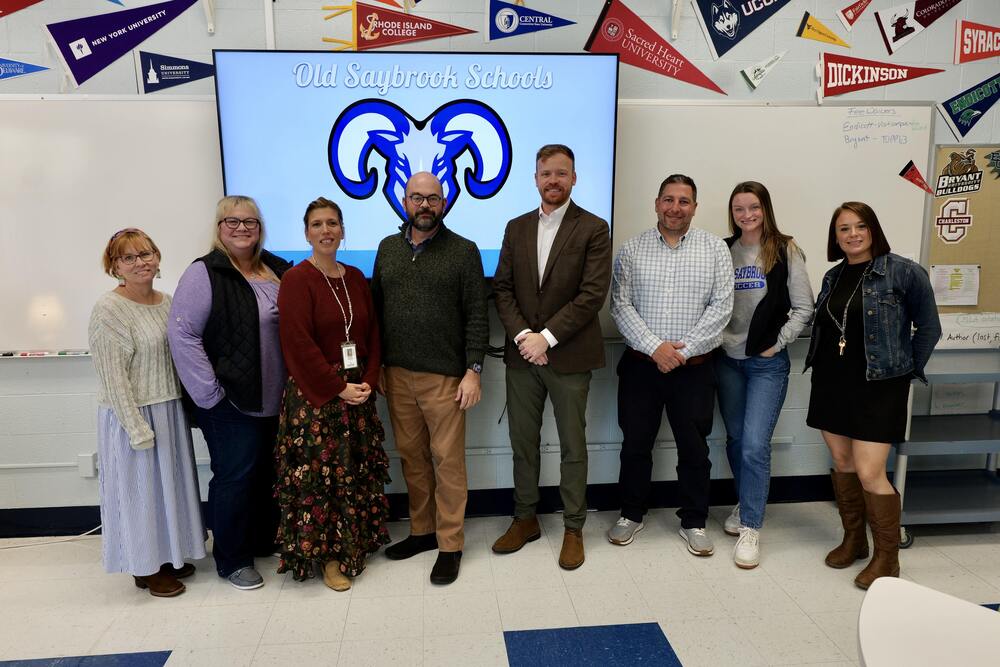
On Tuesday, October 27, Dustin Nord, Director of the Connecticut Business & Industry Association (CBIA) Foundation for Economic Growth and Opportunity, visited Old Saybrook High School to meet with the District's Pathways Team. The visit brought together statewide workforce research and the work happening locally as Old Saybrook develops its new Pathways program.
The CBIA Foundation focuses on Connecticut's long-term economic growth, including the relationship between education, workforce development, and the needs of businesses across the state. Nord's work has examined the challenges facing career and technical education programs, particularly the need to better connect student preparation with opportunities in Connecticut's evolving economy.
That connection is central to Old Saybrook's approach to Pathways.
Through its 2026–2031 Strategic Plan, the District is building a program designed to help students connect their interests with academic opportunities and potential careers. Six Pathways Coordinators are working to develop experiences that extend beyond traditional coursework, incorporating community partnerships, career exploration, and opportunities for students to apply what they learn in real-world settings.
While career pathways are sometimes associated primarily with students who do not plan to attend college, Old Saybrook is approaching the concept differently. The goal is to provide every student with opportunities to explore potential careers, whether their next step involves a four-year university, technical training, or entering the workforce.
That approach has already influenced investments at Old Saybrook High School, particularly in medical science and business education. Both areas were identified through student interest and postsecondary trends as fields where additional learning opportunities could help students better understand the careers they may eventually pursue.
Developing those opportunities, however, requires more than new courses or classroom facilities. It also means building relationships with businesses, community organizations, and neighboring districts that can help students experience careers firsthand.
For smaller school districts, creating those connections presents challenges that are not always evident when looking at larger schools with more extensive resources. Transportation, scheduling, and the availability of local employers can all influence what opportunities are possible. These were among the issues explored during Nord's visit, as the Pathways Team shared its experiences and considered how broader statewide efforts could support schools facing similar circumstances.
The conversation also highlighted an important advantage of Old Saybrook's size. With students progressing through the same district from elementary school through graduation, there is an opportunity to introduce career exploration earlier, build on those experiences over time, and provide more individualized guidance as students begin considering their futures.
Although Old Saybrook's Pathways program is still in its early stages, the work represents a deliberate effort to rethink how schools help students prepare for what comes next. The District is not simply looking to offer additional career-related classes. It is working to create stronger connections between students' interests, the education they receive, and the opportunities available to them after graduation.
Nord's visit reinforced the importance of that work while providing an opportunity for Old Saybrook to contribute its perspective to a larger conversation taking place across Connecticut. As the state continues exploring ways to strengthen career pathways, the experiences of smaller districts will be an important part of determining how those opportunities can reach students in communities of every size.
For Old Saybrook, the focus remains on giving students the experiences, knowledge, and confidence to make informed decisions about their futures, while building stronger connections between the schools and the community they serve.